


Rare books, manuscripts, music, ephemera…
Posted on 22nd October 2026 by simonbeattie
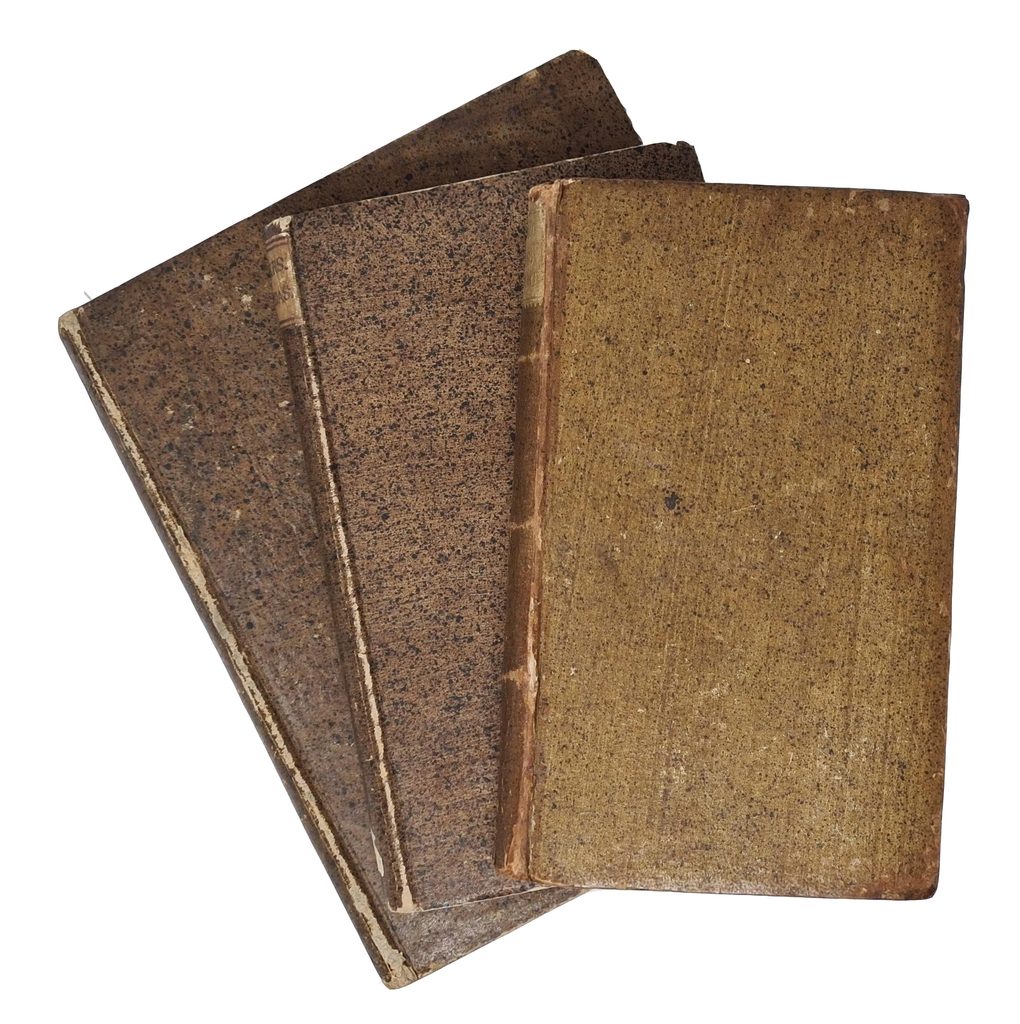
I have written in the past about the different types of decorated paper which you can find on eighteenth-century books, such as brocade paper, bronze-varnish paper, and paste paper. Today I thought I would write about Kiebitzpapier, partly because it was such a common paper in Germany but also simply because I happen to have a number of examples at the moment (each bought for the book inside, rather than the paper covering it!).
Kiebitz is the German word for a lapwing (Vanellus vanellus), a wading bird commonly found across Europe:

And the reason Kiebitzpapier is called that is that due to the speckled nature of the lapwing’s eggs:
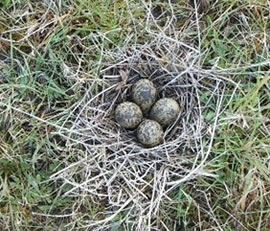
(The lapwing is also called the peewit or green plover in English, and according to Wikipedia plover eggs used to be a delicacy, which I suppose may account for why they were so well known that someone creating a brown sprinkled paper immediately thought of lapwing eggs when coming up with a name for it.)
Kiebitzpapier is a sprinkled paper (Sprenkelpapier in German), one of the simplest methods of producing a decorated paper, in which droplets of paint are sprinkled onto a (usually) single-colour paper (in the case of Kiebitzpapier, paper which has first been coloured brown). The technique goes back to the second half of the sixteenth century, making Kiebitzpapier the oldest sprinkled paper in Europe. In the past, it was also called französisches Lederpapier (‘French leather paper’), as the technique of sprinkling was similar to that employed by French bookbinders on leather bindings, and it was popular in Germany for wrappers on pamphlets, being a quicker and cheaper covering for such thin books than binding in leather, but also a very common paper for covering boards, as in my picture above.
Interesting Simon. Some of my 18th century German books with bindery dust jackets use this brown sprinkled paper as the outer paper for both the dust jackets and the bindings. I have always just referred to it as paste paper. Good to have a more accurate name. I have an 1898 Immanuel Kant first edition with binding and jacket in this paper. Do any of your examples have dust jackets – or just the bindings? The jackets usually have wastepaper underlayer.
Thanks, Mark. Paste paper is a different technique (see my earlier blogpost). And no, no jackets on any of the examples I have here, I’m afraid. Will let you know if I do.
Thanks. My Kant jacketed book, btw, is 1798, not 1898.
That’s what I presumed!
Very interesting!
There’s always more to learn about the different types of decorated paper and their names.
Thanks for sharing
Thank you!
Brilliant Simon, thanks for posting.
Would you say that the black/brown sprinkle over brown surface coloring is what distinguishes /Kiebitzpapier/ from more general /Sprenkelpapier/? Sprinkled here (https://www.schwebenbuntpapier.com/collection/25.010), Kiebitz here (https://www.schwebenbuntpapier.com/collection/25.061)?
It is interesting how these named subcategories develop within broader techniques… everything is language, I suppose!
Thanks! And yes, I think Kiebitzpapier needs to be brown (to mimic leather).
…but not to be confused with Wurzelmarmorpapier, also a leather mimic!
Thanks again.